
Are you interested in Healthcare? Then this is the perfect course for you. Learn how to manage Healthcare professionally!

10 hours Duration

Completion Certificate

No Entry Requirements

Accredited CPD Course
Get Your Course Now
Only 1 Day Left at this price
Discount 67% £90.00


 30-day money-back guarantee

Course Overview
Function of the Musculoskeletal System & Rehabilitation CPD
Build a clearer understanding of how bones, joints and muscles work together to support movement, stability and physical function with this focused online course from CPDCourses.com. Across 10 hours of study, you will explore the function of the musculoskeletal system alongside the principles of assessment, therapeutic intervention and rehabilitation.
You can take this course as part of your wider professional development or compare it with our full range of CPD courses. If your work or future study relates to health, care or rehabilitation, you can also explore our dedicated Healthcare CPD courses.
With no formal entry requirements, the course provides an accessible introduction to musculoskeletal rehabilitation. Three focused modules take you from the foundations of movement and recovery through assessment concepts and therapeutic interventions to longer-term and more complex musculoskeletal conditions.
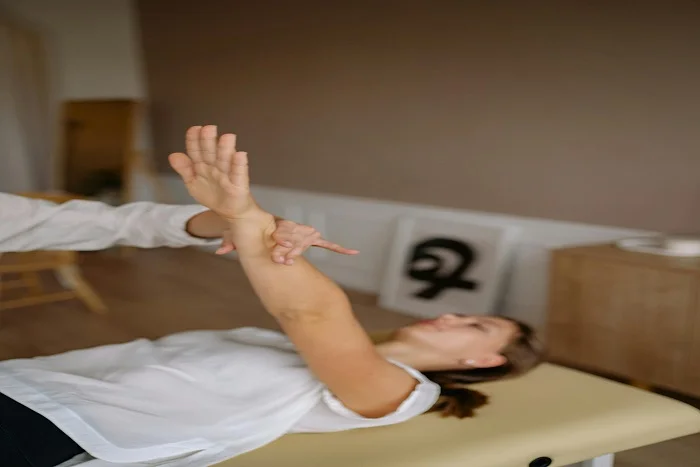
The musculoskeletal system gives the body structure, enables movement and helps maintain stability. Bones provide support, joints allow movement between structures, and muscles generate and control movement through coordinated contraction.
When injury, pain, weakness or a long-term musculoskeletal condition affects this system, everyday activities can become more difficult. Rehabilitation aims to support safe movement, physical function and recovery through appropriate assessment, exercise and therapeutic strategies delivered within the practitioner's competence and professional scope.
This course introduces those principles in a structured online format.
What Is the Function of the Musculoskeletal System?
The musculoskeletal system combines bones, muscles, joints and associated connective structures to support the body and make movement possible.
Its main functions include:
- Providing structural support
- Enabling voluntary movement
- Maintaining posture and body position
- Stabilising joints during activity
- Helping protect internal structures
- Transferring force during movement
- Supporting everyday physical tasks
These functions are closely connected. Movement does not depend on muscles alone, and stability does not depend only on bones. Effective physical function relies on different structures working together.
Understanding this relationship provides an important foundation for studying musculoskeletal rehabilitation.
Who Is This Course For?
This programme may be useful if your work, studies or professional-development goals involve movement, mobility, rehabilitation or physical wellbeing.
It may be relevant to:
- Healthcare assistants supporting rehabilitation programmes
- Physiotherapy and therapy support staff
- Rehabilitation support workers
- Nurses and student nurses involved in mobility support
- Community-care workers supporting people with reduced mobility
- Care-home staff assisting older adults with movement and independence
- Fitness professionals and exercise instructors
- Sports coaches and activity leaders
- Wellbeing practitioners interested in physical recovery
- Learners considering further study in physiotherapy, occupational therapy, sports therapy or related subjects
No previous qualification or professional experience is required to enrol.
This is a CPD learning course. It does not qualify you as a physiotherapist, occupational therapist or other regulated healthcare practitioner, and it does not authorise you to diagnose conditions or independently provide clinical treatment outside your existing competence.
What Will You Learn?
The course develops your theoretical understanding of musculoskeletal function and rehabilitation.
Across the three modules, you will explore:
- How muscles, joints and bones contribute to movement;
- Foundational principles of musculoskeletal rehabilitation;
- The relationship between physical function and recovery;
- Musculoskeletal assessment concepts;
- Therapeutic-intervention principles;
- Safe movement and mobility support;
- Pain and functional limitations;
- Exercise-based rehabilitation;
- Progression planning;
- Chronic and long-term musculoskeletal conditions; and
- Approaches used to support longer-term physical recovery.
The emphasis is on understanding the principles behind rehabilitation rather than preparing learners to undertake unsupervised clinical assessment or treatment.
How Muscles, Bones and Joints Work Together
Musculoskeletal movement depends on coordination.
Bones form the body's structural framework. Joints create points at which movement can occur. Muscles generate force, while tendons connect muscles to bones and help transmit that force to produce movement.
Different muscles may also work together to control or stabilise movement.
This coordinated system supports activities ranging from standing and walking to lifting, reaching and exercise.
A disruption affecting one part of the system can therefore influence other structures. Pain, weakness, joint restriction or injury may alter movement patterns and reduce physical function, which is one reason rehabilitation takes a broader view of movement rather than focusing only on one isolated structure.
Understanding Musculoskeletal Rehabilitation
Musculoskeletal rehabilitation focuses on supporting people affected by injuries, pain, weakness or other conditions involving muscles, joints and related structures.
Depending on individual needs and professional context, rehabilitation may involve:
- Graded exercise
- Strength development
- Mobility work
- Movement practice
- Activity modification
- Education
- Monitoring progress
- Adjusting rehabilitation goals over time
This course introduces the reasoning behind these approaches.
If you would like to develop your understanding of therapeutic exercise and pain in greater depth, our Exercise Prescription & Pain Management CPD course provides a closely related next step in your professional learning.
Musculoskeletal Assessment and Therapeutic Intervention
Effective rehabilitation begins with understanding a person's physical function, limitations and recovery needs.
Musculoskeletal assessment may consider areas such as:
- Movement
- Mobility
- Strength
- Pain
- Physical limitations
- Functional ability
- Response to activity
Assessment findings can then contribute to rehabilitation planning within an appropriately qualified professional's scope of practice.
This course introduces these concepts so learners working in support roles can develop a stronger understanding of the reasoning behind rehabilitation programmes.
It does not qualify learners to diagnose musculoskeletal injuries or independently prescribe treatment.
Exercise, Pain and Recovery
Pain and movement are closely connected in many musculoskeletal conditions, but rehabilitation is rarely as simple as encouraging someone to exercise more.
Appropriate rehabilitation may need to consider the person's condition, current abilities, pain response, recovery stage and functional goals.
Gradual progression can be important when restoring movement and strength. The principles introduced here can be developed further through our exercise prescription and pain management course, particularly if therapeutic exercise is relevant to your existing role or future study.
Supporting People With Long-Term MSK Conditions
Some musculoskeletal problems resolve relatively quickly, while others can affect a person's mobility and daily activities over a much longer period.
Long-term rehabilitation may therefore place greater emphasis on:
- Maintaining function
- Building or preserving strength
- Supporting safe activity
- Adapting exercise appropriately
- Monitoring progress
- Setting realistic goals
- Encouraging sustainable movement
The third module introduces these longer-term rehabilitation principles.
If you want to broaden your rehabilitation knowledge beyond musculoskeletal conditions, our Neurological Physiotherapy CPD course provides a logical progression into rehabilitation where neurological conditions affect strength, balance, coordination and physical function.
Rehabilitation and Daily Living
Musculoskeletal function affects more than exercise or sport. It supports many ordinary daily activities, including walking, standing, changing position, reaching and carrying out personal tasks.
For people affected by injury, chronic pain or limited mobility, improving function may therefore contribute to greater independence in everyday life.
This makes rehabilitation relevant across hospitals, community services, residential care, fitness settings and other environments in which people receive mobility or physical-function support.
The course helps you understand this broader rehabilitation context without suggesting that a short CPD programme replaces specialist clinical education.
Study Method and Flexibility
This is an online CPD course with a study duration of 10 hours.
The focused format allows you to develop your knowledge around work, family or other commitments.
With no formal entry requirements, the programme can be used as an introduction to musculoskeletal rehabilitation or as supplementary CPD for learners already working around health, mobility, care or physical activity.
Professional Development Value
This course may help strengthen your understanding of how the musculoskeletal system supports movement and how rehabilitation principles can contribute to recovery.
It may be useful if you want to:
- Improve your understanding of muscles, bones and joints
- Develop greater awareness of musculoskeletal rehabilitation
- Understand the principles behind mobility and exercise support
- Become more familiar with assessment and therapeutic terminology
- Strengthen knowledge relevant to a support or fitness role
- Add structured learning to your cpd record
- Prepare for further study in rehabilitation, physiotherapy, occupational therapy or sports-related subjects
Completion does not guarantee employment, promotion, professional registration or entry into a regulated clinical role.
Why Choose This Course?
This programme provides focused learning around musculoskeletal function and rehabilitation.
You can:
- Complete 10 hours of online study
- Enrol with no formal entry requirements
- Work through three focused modules
- Understand how muscles, bones and joints support movement
- Explore musculoskeletal assessment principles
- Learn about therapeutic and exercise-based approaches
- Examine rehabilitation for long-term msk conditions
- Strengthen knowledge relevant to mobility and recovery
- Obtain evidence of completed professional-development learning through the available certificate options
When you are ready to explore other areas of health and rehabilitation learning, browse our wider selection of Healthcare CPD courses.
Start Your Musculoskeletal Rehabilitation CPD Course
Develop a clearer understanding of how the musculoskeletal system supports movement and how rehabilitation principles are applied to mobility, exercise and longer-term recovery.
With 10 hours of online study, three modules and no formal entry requirements, this course offers an accessible way to strengthen your understanding of musculoskeletal function and rehabilitation.
Enrol today and begin your Musculoskeletal Rehabilitation CPD course online.
Course Syllabus
Module 1 — Foundations of Musculoskeletal Rehabilitation
Begin by exploring the foundations of the musculoskeletal system and rehabilitation.
This module considers how joints, muscles and bones work together to create movement and stability. You will also examine how rehabilitation can contribute to healing, recovery and physical function.
The module provides the anatomical and rehabilitation context needed for the more advanced topics that follow.
Module 2 — Advanced Assessment & Therapeutic Interventions
The second module introduces musculoskeletal assessment concepts and therapeutic approaches.
You will explore how movement, pain and physical function may be considered when planning rehabilitation and examine techniques used to support safer movement and improved mobility.
The focus is on developing your understanding of assessment and intervention principles. Clinical assessment, diagnosis and treatment must always remain within the scope of appropriately trained and authorised professionals.
Module 3 — Rehabilitation for Complex & Long-Term MSK Conditions
The final module considers rehabilitation where musculoskeletal problems are persistent, complex or long term.
Topics include exercise therapy, progression planning and approaches used to support sustained recovery and physical function.
You will gain a broader understanding of why rehabilitation plans may need to be adjusted over time according to individual needs, limitations and progress.
Career Path
Upon successful completion of the Musculoskeletal Rehabilitation CPD, candidates have two certificate options:
Option 1: Certificate Issued by the Quality Licence Scheme (QLS)
This certificate confirms completion of a professionally developed training programme that meets high-quality education standards.
Option 2: Accredited CPD Certificate Issued by the CPD Standards Office
This globally recognised certificate demonstrates your commitment to continuous professional development and is valued across healthcare industries.
Both certificates strengthen your professional credibility and support long-term career progression.
Endorsement
After successfully completing the course, two certificate options are available:
Certificate issued by the Quality Licence Scheme (QLS)
Accredited CPD Certificate issued by the CPD Standards Office
A CPD certificate can provide evidence that you have completed structured professional-development learning.
It is not the same as an academic degree, regulated physiotherapy qualification, professional registration or licence to practise.
If you need the learning to count towards a particular employer, regulator or professional body's formal CPD requirements, check its current acceptance criteria before relying on the certificate for that purpose.
For a clearer explanation of professional-development certification, see our guide to CPD accreditation.
FAQs
What is the main function of the musculoskeletal system?
The musculoskeletal system provides support and enables movement through the coordinated action of bones, joints, muscles and associated structures. It also contributes to posture, stability and everyday physical function.
Does this course cover muscles, bones and joints?
Yes. The first module introduces how muscles, joints and bones work together and how understanding these relationships supports the study of musculoskeletal rehabilitation.
Will I learn musculoskeletal rehabilitation techniques?
The course introduces assessment concepts, therapeutic interventions, exercise therapy and rehabilitation planning. It is theoretical CPD learning rather than clinical licensure or a practical professional qualification.
Do I need healthcare experience before enrolling?
No. There are no formal entry requirements. The programme can therefore be used by beginners as well as people already working in health, care, fitness or rehabilitation-support settings.
Will this course qualify me as a physiotherapist or rehabilitation practitioner?
No. This course does not confer professional registration, a physiotherapy qualification or permission to diagnose or independently treat musculoskeletal conditions. Formal clinical roles require the relevant education, supervised training and professional requirements.


Your CPD Certificate, Ready When You Complete
Complete your course and download your PDF certificate straight away. Keep it for your CPD records, add it to your professional portfolio or use it as evidence of your completed learning.
Accredited CPD Certification
Receive an accredited CPD certificate as evidence of your successfully completed professional development.
Instant PDF Download
Download your digital certificate as soon as you successfully complete your course – no waiting or delivery required.
Easy to Save & Share
Keep your certificate for your records or add it to your professional portfolio whenever you need it.

Unique Certificate ID
Each certificate includes a unique identification number for clear and reliable record keeping.
Professional Presentation
Receive a professionally designed PDF certificate that provides a clear record of your learning achievement.
Completion Date Included
Your certificate displays your completion date, helping you maintain an accurate and organised CPD record.


What Learners Say About CPD Courses
Excellent Course
Lina, 22, Jun 2026
I found the course genuinely valuable for professional growth. The content was well-structured, practical, and relevant to current industry standards. The flexible learning format suited a busy schedule. Overall, it boosted my confidence, sharpened my skills, and I would recommend it to anyone seeking career advancement.
Sofia R., 13, Apr 2026
The best thing for my CPD course was its flexibility. It was easy to fit my studies around work and other commitments.
Thabo M., 13, Feb 2026
The course was well structured and easy to follow. The learning materials explained the topics clearly and made studying online very easy to manage.
Naledi K., 18, Aug 2026
A useful learning experience that helped me refresh my knowledge and continue developing professionally. I particularly appreciated being able to study in my own time.
James W., 18, Jul 2026
The online format was convenient and simple to use. I enjoyed being able to access the course whenever I had time and work through each section independently.
Emily R., 15, Sep 2026
I found the course informative and practical. It gave me an opportunity to develop my knowledge without having to interrupt my work schedule.
Omar A., 29, Jul 2026
The course content was clear and organised, I got very good support from my tutor. I really appreciate cpdcourses for this
Giulia B., 03, Apr 2026
it is a very good experience for me. Before starting the course i was nervos but tutor's support helped me to manage things very esily. I hope it will help me in my professional career.
Mehmet K., 23, May 2026
A really good experience from start to end. I enjoyed the flexibility of the course and would consider studying another CPD course in the future.
Aoife M., 19, Jul 2026
Related Courses



Celebrating our Clients and Partners






