
Are you interested in Healthcare? Then this is the perfect course for you. Learn how to manage Healthcare professionally!

10 hours Duration

Completion Certificate

No Entry Requirements

Accredited CPD Course
Get Your Course Now
Only 1 Day Left at this price
Discount 67% £90.00


 30-day money-back guarantee

Course Overview
Adaptive Devices & Assistive Technology CPD Course
Develop a clearer understanding of adaptive devices, assistive technology and communication aids with this focused healthcare course from CPDCourses.com. The programme explores how appropriate equipment can support communication, mobility, independence and participation in everyday activities.
You can take this programme as part of your wider professional development or compare it with our full range of CPD courses. If your work or future study relates to health, care, rehabilitation or disability support, you can also explore our dedicated Healthcare CPD courses.
Adaptive equipment can play an important role in person-centred care. From communication aids and mobility-support equipment to practical tools for everyday tasks, assistive technology can help reduce barriers and support greater independence when it is selected and used appropriately.
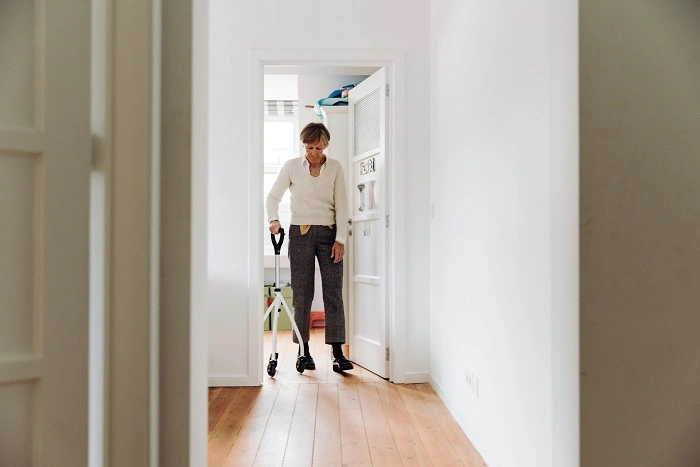
Adaptive devices are tools or pieces of equipment designed to help people carry out activities that may otherwise be difficult because of physical, sensory, cognitive or communication needs.
Within healthcare and social-care settings, such equipment may be used to support:
- Communication
- Mobility
- Personal care
- Eating and drinking
- Positioning
- Access to everyday activities
- Environmental control
- Greater independence
This course introduces the principles behind assistive technology and adaptive equipment rather than training learners to prescribe, clinically assess or independently recommend specialist devices outside their professional competence.
If you are choosing CPD for a healthcare-related role, our guide to choosing an accredited healthcare CPD course can help you consider course relevance, professional-development value and certification.
What Are Adaptive Devices?
Adaptive devices are tools or equipment designed to make everyday tasks more accessible.
They may be relatively simple, such as modified utensils or supportive handles, or more advanced, such as electronic communication systems or environmental-control technology.
The purpose is not simply to provide equipment. Effective use depends on matching a device to the person's needs, abilities, environment and goals.
Understanding this relationship can be particularly valuable for people working in healthcare, rehabilitation and support settings.
Adaptive Communication Devices
Adaptive communication devices can help people who experience difficulty speaking, writing or expressing their needs in conventional ways.
Depending on the individual, communication support may involve:
- Picture or symbol-based systems
- Communication boards
- Adapted keyboards
- Speech-generating technology
- Touch-screen communication tools
- Switches and access devices
- Other forms of augmentative or alternative communication
The most appropriate option depends on the person's communication needs, abilities and circumstances.
This course introduces the principles behind adaptive communication devices without suggesting that learners can independently carry out specialist speech, language or assistive-technology assessments.
Who May Benefit From This Course?
This course may be relevant to learners who work around disability support, rehabilitation, healthcare or daily-living assistance.
It may be useful for:
- Healthcare assistants
- Care and support workers
- Rehabilitation support staff
- Occupational-therapy support staff
- Physiotherapy assistants
- Care-home staff
- Community-support workers
- Disability-support workers
- Education or learning-support staff
- Family carers seeking greater general awareness
- Learners considering further study in rehabilitation or allied health
The course should be viewed as continuing professional development rather than a regulated clinical qualification.
Supporting Independence Through Assistive Technology
One of the main purposes of adaptive equipment is to reduce unnecessary barriers to everyday activity.
Appropriate equipment may help a person:
- Communicate more effectively
- Move more safely
- Take part in personal care
- Complete domestic tasks
- Participate in education or work
- Access leisure activities
- Maintain greater control over daily routines
The goal should remain person-centred. A device is useful only when it suits the individual's needs and can be used safely and effectively within the relevant care or support environment.
Adaptive Equipment and Daily Living
Daily-living activities can include dressing, washing, eating, preparing food, moving around the home and using household equipment.
Adaptive devices may support these activities by reducing physical effort, improving grip, increasing stability or making an activity easier to access.
For learners whose responsibilities extend beyond assistive equipment into broader care and daily-living support, our Health and Social Care courses provide a relevant route into related professional-development topics.
Person-Centred Selection of Adaptive Devices
There is no single adaptive device that is suitable for everyone.
When equipment is considered within professional practice, relevant factors may include:
- The person's functional needs
- Physical or sensory limitations
- Communication abilities
- Comfort
- Safety
- Environmental barriers
- Ease of use
- Personal preference;
- The goals the individual wants to achieve
This is why assistive-technology decisions may involve healthcare professionals, carers, family members and other specialists working together.
The course helps build awareness of these considerations rather than replacing specialist assessment.
Communication, Choice and Dignity
Adaptive communication devices can support much more than basic requests.
Effective communication may help people express preferences, ask questions, participate in care decisions and maintain greater control over everyday life.
For this reason, communication support is closely connected to dignity and person-centred care.
Developing an understanding of assistive communication can therefore complement broader learning in healthcare, social care and rehabilitation.
Adaptive Devices in Rehabilitation
Adaptive equipment may form part of rehabilitation when a person is adjusting to changes in movement, coordination or physical function.
Equipment can sometimes support safer participation in daily activities while rehabilitation progresses.
For complementary learning about muscles, joints, movement and physical recovery, our Musculoskeletal Rehabilitation CPD course explores musculoskeletal function, mobility, assessment concepts and rehabilitation.
This can be particularly useful for learners who want to understand the relationship between physical rehabilitation and equipment used to support everyday function.
Adaptive Devices and Neurological Rehabilitation
Neurological conditions can affect movement, balance, coordination, communication and a person's ability to complete everyday activities independently.
Assistive technology and adaptive equipment may therefore form part of wider support or rehabilitation strategies, depending on the individual's needs.
If you want to develop your understanding of neurological movement and functional recovery, our Neurological Physiotherapy CPD course provides a logical progression into neurological rehabilitation, movement difficulties and longer-term support.
Safety and Appropriate Use
Adaptive devices should be used appropriately and according to the needs of the individual.
Incorrect equipment, poor positioning or unsuitable use may reduce effectiveness or create additional difficulties.
Where specialist assessment, fitting, clinical judgement or professional authorisation is required, those responsibilities remain with appropriately qualified practitioners.
This course therefore develops awareness and understanding rather than granting clinical authority to prescribe or fit specialist equipment.
Assistive Technology and Modern Healthcare
Assistive technology is becoming increasingly integrated into modern care environments.
Digital devices can support communication, access and independence, while simpler adaptive equipment continues to play an important role in everyday care.
Understanding both traditional adaptive equipment and newer assistive technologies can help learners develop a broader perspective on how practical support can be adapted around an individual's circumstances.
For further professional development across patient care, rehabilitation and related healthcare subjects, browse our wider selection of Healthcare CPD courses.
Professional Development Value
This course may help strengthen your awareness of adaptive devices and their role in supporting independence, communication and daily living.
It may be useful if you want to:
- Understand the purpose of adaptive equipment
- Recognise different types of communication aids
- Improve awareness of person-centred equipment selection
- Understand how adaptive devices may support rehabilitation
- Develop greater confidence with assistive-technology terminology
- Add relevant learning to your CPD record
- Prepare for further study in healthcare, rehabilitation or support work
Completion does not qualify you as an occupational therapist, physiotherapist, speech and language therapist or assistive-technology specialist.
Why Study Adaptive Devices and Assistive Technology?
Understanding assistive equipment can be valuable in many care and support environments because it helps learners recognise how practical barriers can affect independence.
By developing greater awareness of adaptive technology, you can build knowledge relevant to:
patient and service-user support;
- Communication
- Rehabilitation
- Disability awareness
- Daily-living assistance
- Person-centred care
- Multidisciplinary working
The course is designed to strengthen understanding rather than replace specialist professional training.
Start Your Adaptive Devices CPD Learning
Develop a stronger understanding of assistive technology, adaptive communication devices and practical equipment used to support daily living and independence.
Explore how person-centred equipment choices can reduce barriers, support communication and contribute to safer, more accessible care.
You can also browse our full range of healthcare CPD courses when you are ready to continue your learning in rehabilitation, care and patient support.
Enrol and begin building your knowledge of Adaptive Devices & Assistive Technology.
Course Syllabus
This course consists of the following units:
Module 1 — Foundations of Assistive Technology
This module introduces essential concepts behind assistive tools, explaining how adaptive devices support mobility, communication, and independent living.
Module 2 — Clinical Practice and Device Management
Learners explore practical handling of adaptive equipment, covering assessment, selection, safety checks, and correct usage across different care settings.
Module 3 — Innovation and Service Development
This module focuses on new technologies including adaptive communication devices, digital tools, and innovative solutions shaping the future of assistive care.
Career Path
Completing the Assistive Technology & Adaptive Equipment CPD opens opportunities across healthcare, social care, education, and rehabilitation services. Graduates may progress into roles such as Healthcare Assistant, Occupational Therapy Assistant, Support Worker, Rehabilitation Support Officer, SEN Classroom Assistant, Community Carer, or Assistive Technology Coordinator. This course also supports progression into advanced study in occupational therapy, disability support, or health sciences. With a solid understanding of adaptive devices, communication aids, and mobility solutions, learners can confidently support individuals with diverse needs. The internationally recognised CPD certificate enhances professional credibility and strengthens career prospects within a wide range of care settings.
Endorsement
A CPD certificate can provide evidence of completed professional-development learning where the relevant certificate option is available for your course.
CPD certification should not be confused with a regulated healthcare qualification, professional registration or licence to practise.
If you need your learning to satisfy a specific employer, regulator or professional body's requirements, check its current acceptance criteria before relying on a CPD certificate for formal credit.
You can learn more about the distinction between professional-development learning and formal qualifications in our guide to CPD accreditation.
FAQs
What are adaptive devices?
Adaptive devices are tools or equipment designed to help people complete activities that may otherwise be difficult because of physical, sensory, cognitive or communication needs.
What are adaptive communication devices?
Adaptive communication devices are tools that support people who have difficulty communicating through speech or writing. They may include communication boards, symbols, electronic systems, switches or speech-generating technology.
Who might use adaptive equipment?
Adaptive equipment may be used by people with disabilities, injuries, neurological conditions, mobility limitations, communication difficulties or other functional needs. The appropriate device depends on the individual.
Does this course qualify me to prescribe assistive equipment?
No. This is CPD learning rather than a clinical qualification. Specialist equipment assessment, prescription or clinical recommendation may require relevant professional qualifications, training and competence.
Can adaptive devices support rehabilitation?
Yes. Adaptive equipment can sometimes support participation in everyday activities while a person works towards rehabilitation goals. The type of equipment and its use should be based on individual needs and appropriate professional assessment where required.


Your CPD Certificate, Ready When You Complete
Complete your course and download your PDF certificate straight away. Keep it for your CPD records, add it to your professional portfolio or use it as evidence of your completed learning.
Accredited CPD Certification
Receive an accredited CPD certificate as evidence of your successfully completed professional development.
Instant PDF Download
Download your digital certificate as soon as you successfully complete your course – no waiting or delivery required.
Easy to Save & Share
Keep your certificate for your records or add it to your professional portfolio whenever you need it.

Unique Certificate ID
Each certificate includes a unique identification number for clear and reliable record keeping.
Professional Presentation
Receive a professionally designed PDF certificate that provides a clear record of your learning achievement.
Completion Date Included
Your certificate displays your completion date, helping you maintain an accurate and organised CPD record.


What Learners Say About CPD Courses
Excellent Course
Lina, 22, Jun 2026
I found the course genuinely valuable for professional growth. The content was well-structured, practical, and relevant to current industry standards. The flexible learning format suited a busy schedule. Overall, it boosted my confidence, sharpened my skills, and I would recommend it to anyone seeking career advancement.
Sofia R., 13, Apr 2026
The best thing for my CPD course was its flexibility. It was easy to fit my studies around work and other commitments.
Thabo M., 13, Feb 2026
The course was well structured and easy to follow. The learning materials explained the topics clearly and made studying online very easy to manage.
Naledi K., 18, Aug 2026
A useful learning experience that helped me refresh my knowledge and continue developing professionally. I particularly appreciated being able to study in my own time.
James W., 18, Jul 2026
The online format was convenient and simple to use. I enjoyed being able to access the course whenever I had time and work through each section independently.
Emily R., 15, Sep 2026
I found the course informative and practical. It gave me an opportunity to develop my knowledge without having to interrupt my work schedule.
Omar A., 29, Jul 2026
The course content was clear and organised, I got very good support from my tutor. I really appreciate cpdcourses for this
Giulia B., 03, Apr 2026
it is a very good experience for me. Before starting the course i was nervos but tutor's support helped me to manage things very esily. I hope it will help me in my professional career.
Mehmet K., 23, May 2026
A really good experience from start to end. I enjoyed the flexibility of the course and would consider studying another CPD course in the future.
Aoife M., 19, Jul 2026
Related Courses

Celebrating our Clients and Partners






